
Following the production of Götterdämmerung, a never-ending applause and a standing ovation celebrated the artists of the 2019 Budapest Wagner Days at the Müpa. A few years ago, a New York Times columnist ranked the Budapest Wagner Days alongside the legendary Bayreuth Festival, and a Telegraph critic writes in superlatives about the performance of the star soloists and the sensational acoustics of Müpa. Next year, the 15th Budapest Wagner Days, June 16-23, 2020, will enchant the audience with the renewed Ring Tetralogy, with the Die Meistersinger von Nürnberg and with Waltraud Meier's song recital.
The last two years meant a revival in ’Bayreuth along the Danube’. The Budapest Wagner Days, one of the most prominent series of events in Budapest classical life, got a brand new image in 2018, recognized by several prizes, and presented a renewed production of the Ring Tetralogy this year. After a year’s absence, the tetralogy The Ring of the Nibelung is back, set on stage by director Hartmut Schörghofer with eleven hours of new video footage, and a transformed-rethought choreography, with the help of Gábor Vida.
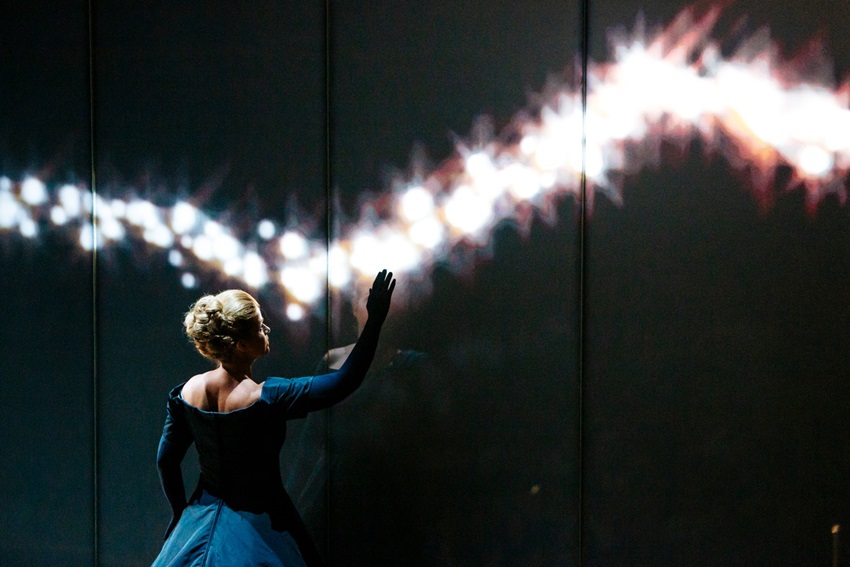
Götterdämmerung (photo: Bálint Hirling)
The eight full house performances of the festival which ran from June 13 to 23, have attracted audiences from all over the world. Which is not surprising, as the international press has been paying particular attention to the performances of the Budapest Wagner Days for years. Now several journalists arrived again to the festival from Germany, the United States, Japan, Austria, Turkey, Finland, Italy, Estonia and England, among others. David Karlin, founder and editor-in-chief of Bachtrack, summarized his experience as follows: ‘More than a hundred musicians are playing, I can't even measure how many, hundreds of thousands of notes. At the Müpa, we hear them all, at a level and in such detail that would be impossible to hear in an opera house... on the whole, the Budapest Ring is a wonderful and absolutely unforgettable experience.’ Mark Telan, critic of British Telegraph, says the following of the revolutionary tetralogy: ’A real revelation. The acoustics is amazing, which means that every singer can be perfectly heard, wherever they are on the stage. And Ádám Fischer conducts with beautiful sophistication…’ The special acoustics of the Béla Bartók National Concert Hall makes the Budapest Wagner Days an extraordinary experience for singers and audiences alike. This year, all these were coupled with unconventional culinary delights: Müpa’s small series craft beers made their debut in four tastes, and in packages inspired by Wagner characters. In addition to the Wagner drinks, festival-goers were welcomed by an installation reflecting the image of the Budapest Wagner Day, designed by Dániel Dublecz, a graphic design student. It was organized in a strategic collaboration between MOME (Moholy-Nagy University of Art and Design) and Müpa.
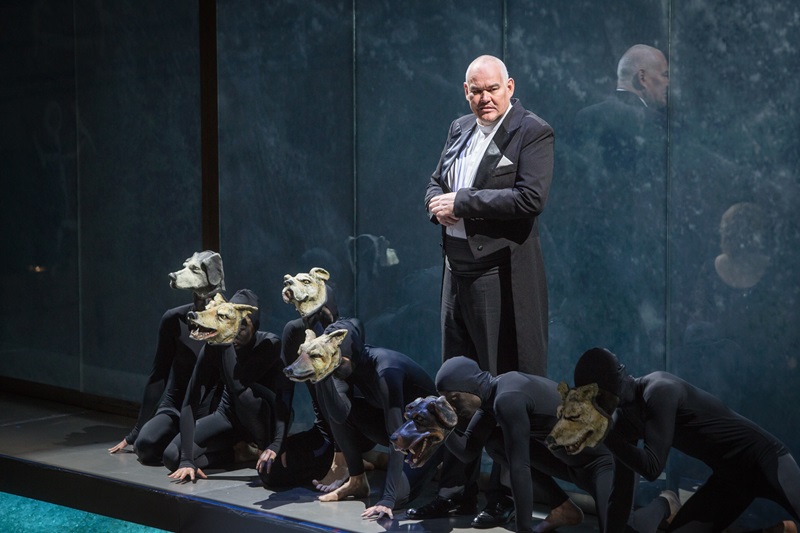
Die Walküre (photo: Szilvia Csibi)
Ádám Fischer, artistic director and conductor of the festival, conducted the Hungarian Radio Symphony Orchestra again, and the audience saw and heard internationally renowned singers from Hungary and abroad. The Australian Stuart Skelton in the role of Siegmund debuted here with huge success. We saw again Camilla Nylundo – who was recently awarded the title Kammersängerin at the Vienna State Opera – as Sieglinde, Johan Reuter as Wotan, and Gerhard Siegel as Mime. In Die Walküre and in Götterdämmerung Catherine Foster, star of Bayreuth Festival sang Brünnhilde, while in Siegfried Allison Oakes, who interpreted Isolde in the Budapest Wagner Days in 2018, played the role of the amazon. Albert Pesendorfer brought the character of the vengeful Hunding and then the intriguing Hagen to life in a Mephisto-like manner, while Christian Franz’s many fans were pleased to see him again as Loge in Das Rheingold. Besides Stefan Vinke's Siegfried and Lauri Vasar’s Gunther, Anna Larsson's Waltraute was also of great interest. Of course, the festival was not lacking in outstanding Hungarian artists. Fricka was sung by Atala Schöck, Alberich by Péter Kálmán, but Erika Gál, Lilla Horti, Polina Pasztircsák, Judit Németh, Zsófia Kálnay, Gabriella Fodor, Beatrix Fodor, Éva Várhelyi, Anna Kissjudit, and Eszter Zemlényi all gave an outstanding performance.

Irene Theorin (photo: Chris Gloag)
Between June 16 and 23, 2020, Müpa will become a lively Wagner sanctuary for the 15th time. The sale of tickets for next year's events is well underway. The festival is framed by Wagner's final musical drama, Die Meistersinger von Nürnberg in a double performance. Between June 18 and 21, 2020, the Ring will be performed in the usual way, on consecutive days, and again with a unique cast. In Die Meistersinger von Nürnberg, Bo Skovhus plays the role of Beckmesser and Klaus Florian Vogt sings Walter von Stolzing. Gábor Bretz, our world-renowned artist, returns to the stage as Fasolt in the Ring and as Veit Pogner in the Die Meistersinger von Nürnberg. Besides Elisabet Strid’s Eve and John Rutherford’s Hans Sachs, the fans are eagerly awaiting the return of the Ring's Brünnhilde, Irene Theorin. After 2017, she is preparing for an astonishing record again: to sing the valkyrie on three consecutive days. Alongside the old-new singers, Albert Pesendorfer, Gerhard Siegel and Johan Reuter will also be on stage to the delight of the audience, as well as their outstanding Hungarian colleagues such as Péter Kálmán, Atala Schöck, Polina Pasztircsák or Erika Gál. As the highlight of the festival, Waltraud Meier, the legendary Wagner singer, one of the most beloved returners of the Budapest Wagner Days, will come again to give a song recital on June 22, 2020. Pianist Josef Breinl will accompany her.
You can watch the mood video for the 2019 Budapest Wagner Days here.
You can read more about the programs of the Budapest Wagner Days 2020 here.
(source: Müpa)